This Week in Cloud — March 12, 2026
Welcome back to The Cloud Cover, your essential guide to navigating the dynamic world of cloud for Solutions Architects, engineers, and IT leaders. This week, the cloud AI power structure shifts, autonomous agents move closer to production reality, and hyperscalers race to become the control plane for enterprise intelligence. Let’s go.
⚡ Amazon and OpenAI Redefine the Cloud AI Hierarchy
While technically announced more than a week ago, the reverberations of the $50 billion strategic partnership between Amazon and OpenAI have dominated the cloud discourse this week. By committing $15 billion upfront and another $35 billion over the coming years, Amazon has finally found its method for breaking Microsoft’s "exclusive" seal on OpenAI’s most advanced models, signaling a new era of multi-cloud model availability that favors customer choice over vendor lock-in.
The most intriguing technical outcome is the "Stateful Runtime Environment." This new environment, powered by OpenAI and hosted on Amazon Bedrock, would allow agents to maintain long-term context, remember prior computations, and move seamlessly across disparate data sources. It might be the infrastructure bridge that turns a chatbot into a persistent digital employee.
Equally significant is the hardware play. OpenAI has committed to consuming 2 gigawatts of AWS Trainium compute capacity over the next eight years. This is a notable validation of AWS’s custom silicon strategy. By diversifying its compute supply chain away from Nvidia-only, OpenAI is securing its future scaling needs while AWS cements its position as a real competitor in foundational model training.
Whether you build on Azure or AWS, you may soon have access to the same frontier-grade intelligence, but the winning platform will be the one that provides the best "glue"—the stateful runtimes, the security guardrails, and the specialized agents—to make that intelligence actionable.
🔍 The Rundown
Agentic Healthcare Operations: AWS launched Amazon Connect Health, a suite of HIPAA-eligible agents designed to automate patient verification, scheduling, and clinical documentation for healthcare providers.
Global DNS Resilience: The Route 53 Global Resolver is now GA, offering anycast DNS resolving with built-in query filtering to mitigate malicious domains and tunneling threats.
Stateful AI Control Planes: Amazon Bedrock’s AgentCore runtime added Stateful Model Context Protocol (MCP) features, enabling session continuity and isolated execution environments for complex agent workflows.
Streamlined Permissions Workflow: AWS added an in-workflow IAM role creation panel, reducing friction by allowing developers to configure security roles directly within service setup screens.
Autonomous DevOps Operations: Microsoft announced the GA of the Azure SRE Agent, which can diagnose and resolve operational issues autonomously by executing code with deep environment context.
Model Ecosystem Expansion: GPT-5.4 is now GA in Microsoft Foundry, while Fireworks AI entered public preview, bringing high-performance open-model inference to Azure.
Automated Legacy Modernization: Microsoft introduced the Azure Copilot migration agent and GitHub Copilot modernization agent in public preview to automate complex framework and runtime upgrades.
AI Service Reliability: A 20-hour Azure OpenAI Service degradation highlighted the ongoing reliability challenges of centralized API dependencies during periods of unexpected resource exhaustion.
Landmark Security Acquisition: Google Cloud officially completed its $32B acquisition of Wiz, signaling a major consolidation of cloud-native application protection (CNAPP) and threat intelligence.
Public Sector AI Agents: Google Cloud introduced Agent Designer for Gemini for Government, allowing agencies to build custom agents for unclassified tasks in a secure environment.
Real-Time Data Streaming: BigQuery Continuous Queries can now stream directly to Spanner in GA, while the new Rapid Bucket GA optimizes I/O performance for zonal AI workloads.
Evolving Threat Landscape: The H1 2026 Cloud Threat Horizons Report reveals that vulnerability exploits have eclipsed credential theft as the primary entry vector for nation-state attacks.
OCI: Infrastructure Hyper-Growth: Oracle reported blowout Q3 financial results, with IaaS revenue surging 84% YoY and RPO reaching $553B on the back of massive AI compute contracts.
OCI: Open Model Flexibility: OCI expanded its generative AI model options with the import of NVIDIA Nemotron 3 Super and Qwen 3 Embedding models, enhancing choice for enterprise developers.
🧐 Best Thing I Saw This Week…
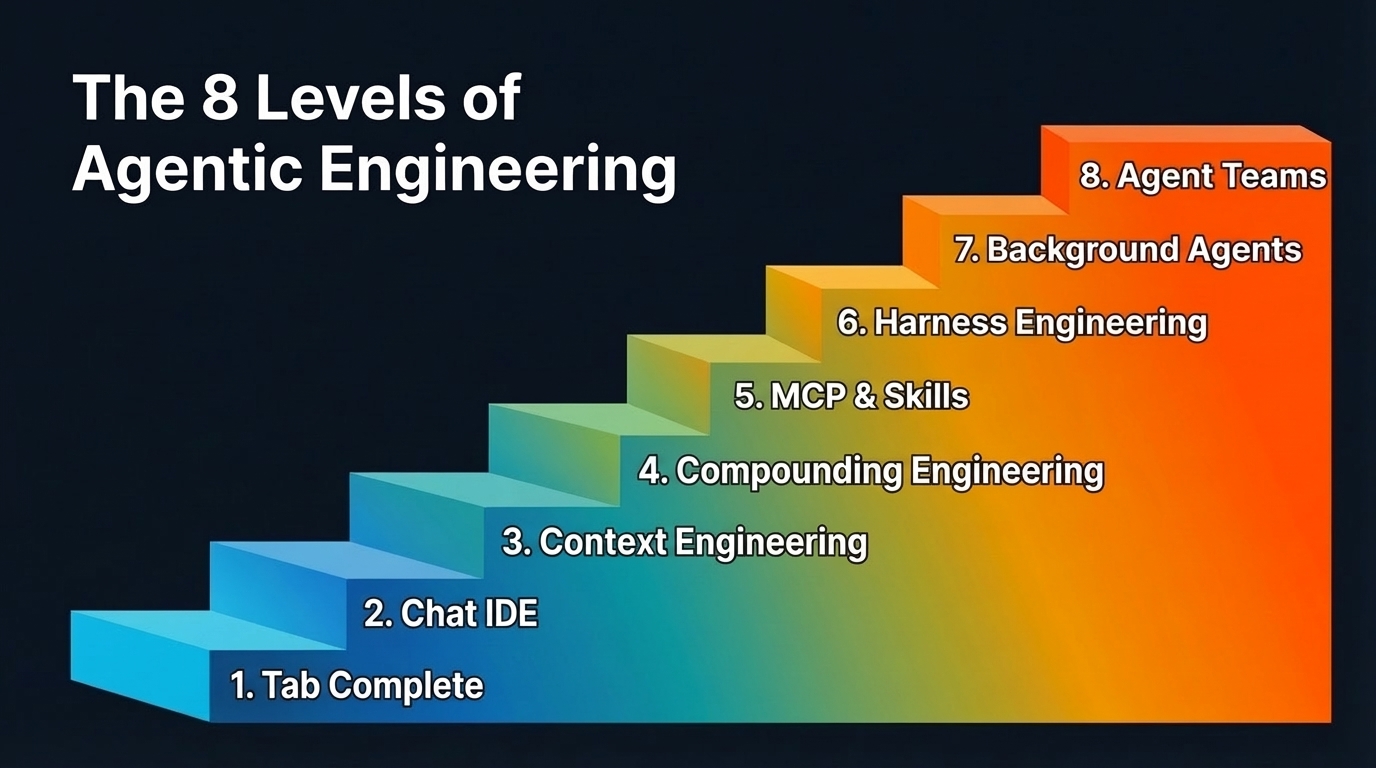
Great writeup on the stages that a company (or individual) can go through when building with agents. Well worth a read…
📈 Trending Now: From Chatbots to Digital Employees
Looking across the announcements this week from AWS, Azure, and GCP, a clear pattern is emerging: the industry is moving past LLMs that just talk to agents that do.
Whether it's the Azure SRE Agent autonomously diagnosing infrastructure failures or Amazon Connect Health agents managing patient schedules, we are seeing the "Operationalization of AI." These systems are being given read/write access to APIs, databases, and internal tools. They are going beyond simple summarization to actually executing business logic.
This brings both immense power and non-trivial risk. The "computer use" capabilities in GPT-5.4 and the stateful runtimes in Bedrock are the technical foundations for this change, but the real challenge for Solutions Architects will be governance. How do you audit an autonomous agent? How do you ensure it doesn't hallucinate a destructive command?
As we move from "Copilots" to "Agents," the value is shifting from the model itself to the control plane—the identity management, the session isolation, and the mathematically verifiable guardrails that allow us to trust these digital employees. It's a fascinating, if slightly nerve-wracking, pivot for the entire ecosystem.
📅 Event Radar
19
Hands on and in person.
23
Learn about AWS's agentic AI offerings.
7
AI sessions coming to a city near you!
22-24
Big conference coming up!
👋 Until Next Week
This week, we saw the biggest hyperscalers stop fighting over who has the best model and start fighting over who has the best infrastructure to run any model autonomously. Between Amazon's $50B partnership, Google's $32B security bet, and Oracle's explosive growth, the scale of the investment is hard to wrap your head around.
Are these tools actually saving 70% of IT effort, or are we just creating more complex systems to manage?